
Member Spotlight: James ’06 MS, ’10 PhD and Lindsay Sulzer ’10 PhD
Posted on Tuesday, March 28, 2023
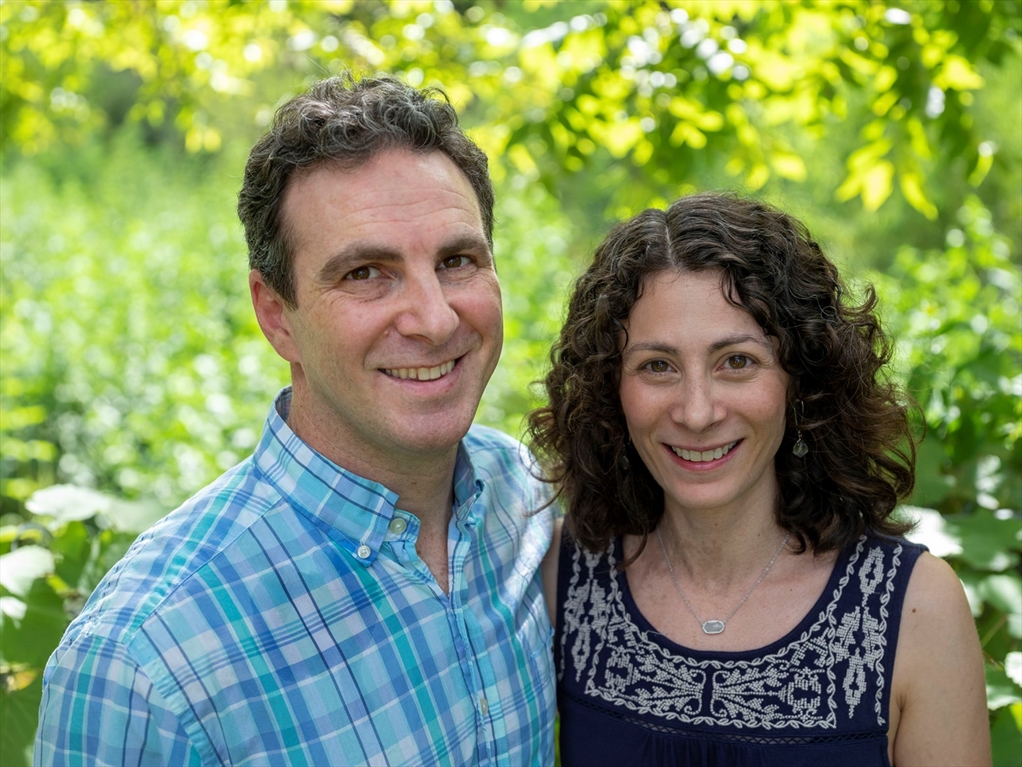
James ’06 MS, ’10 PhD and Lindsay Sulzer ’10 PhD grew up only two miles apart in Cleveland, Ohio, but their relationship did not begin until the two budding engineers’ paths each took on a Northwestern direction. During their time as graduate students, James and Lindsay found not only one another, but also a support system that would help them achieve professional success and navigate personal challenges.
The couple, who are both silver-level NU Loyal members, were drawn to Northwestern for similar reasons—albeit with different engineering specialties. After receiving a master’s degree in rehabilitation robotics from the McCormick School of Engineering in 2006, James wanted to continue his studies and pursue a PhD. Although he had his choice of programs, Northwestern stuck out. “The combination of human-interactive robotics faculty in mechanical engineering and the Rehabilitation Institute of Chicago (now the Shirley Ryan AbilityLab) was too good of an opportunity to pass up,” he says. As for Lindsay, she was focused on the biotech field. Northwestern, she says, had multiple labs doing exactly the kind of research she was interested in. “The interdisciplinary nature of programs at Northwestern and their support of graduates entering both academic and non-academic fields are what drew me in,” she explains.
After Northwestern, the couple’s next stop was in Zurich, Switzerland. James earned a prestigious postdoctoral fellowship to ETH Zurich (the Swiss Federal Institute of Technology, Zurich), where he continued in rehabilitation robotics and also began studying the source of neuromuscular impairments after a stroke. His work focused on the idea of learning to control one’s own brain activity using real-time neuroimaging. Meanwhile, Lindsay landed at the University of Zurich, where she built upon her dissertation work on transplanting cells that produce insulin and, when not present or functioning correctly, lead to diabetes. Applying similar methods, she continued her research focusing on bone and intervertebral disc regeneration.
When the Sulzers returned stateside, James continued his rehabilitation research at the University of Texas at Austin. Recalling the nurturing research community he had at Northwestern, James reached out to former mentors for advice on how to create something comparable in his new environment. That led to the launch of a rehabilitation research consortium, which has seen dozens of collaborative grants and publications accepted. “The consortium has been very successful,” James says, “thanks to the type of culture that was carried from Northwestern.”
Lindsay also leveraged her Northwestern education to help her overcome challenges. She joined a biotech startup that was developing a cell therapy for skin pigmentation disorders, but the onset of the COVID-19 pandemic halted the company’s plans and threatened its survival. Lindsay helped the organization shift its focus to PCR testing with same-day results, providing a vital community service that kept the company afloat through the pandemic. “My training and experience at Northwestern helped me think outside the box,” Lindsay says.
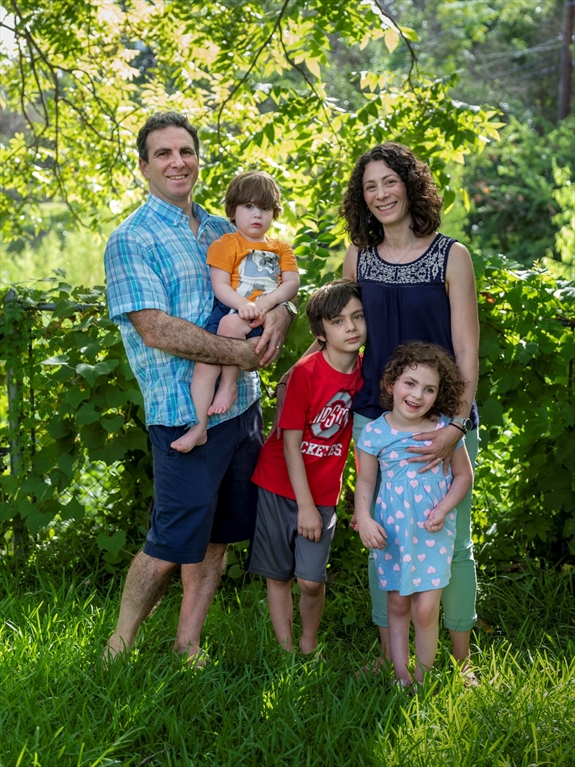
While their careers flourished, James and Lindsay married and welcomed three children. But in the spring of 2020, their daughter suffered a severe brain injury while playing in the backyard, causing their lives to take an unexpected turn. “The edifices of our lives we worked so hard to build toppled,” James says. Despite being an expert in neurorehabilitation, there was nothing he could do for his daughter, which added to his frustration. “I was so helpless,” he says.
Once again, in a time of need, James turned to his Northwestern network by reaching out to colleagues and past mentors. “They offered not just material devices, scientific knowledge, connections, and clinical suggestions but provided the critical emotional support and assurances that we were doing all we could,” he says. “Our lives continue to be a struggle, but the support we’ve received from our friends from Northwestern has been essential.”
The Sulzers’ story gained national attention, being featured in the November 2021 issue of The Atlantic. The couple also co-authored a peer-reviewed research paper detailing their experience and the lessons they have learned from it. “In the process of watching my daughter’s continuing recovery firsthand, it became increasingly apparent that the gap between clinical care and research is wider than it should be,” James says. He’s exploring ways to remedy the problem through research and advocacy, calling on others for support—including cerebral palsy researchers at Northwestern.
As of 2022, the Sulzer family has moved back to their hometown of Cleveland. Lindsay has continued in her role as chief technology officer for TeVido BioDevices, leading manufacturing as well as research and development for the company. She says her time in Northwestern’s labs helped prepare her for the role by providing “such a wealth of knowledge.” James now leads a neurorehabilitation science and technology lab at MetroHealth Hospital and Case Western Reserve University’s Department of Physical Medicine and Rehabilitation. He is looking to Northwestern’s Shirley Ryan AbilityLab as a source of inspiration, integrating his lab with the outpatient therapy floor to increase interaction between patients, clinicians, and researchers.
Because of the strong foundation James and Lindsay received from Northwestern, they choose to give back to the University and to McCormick in particular. “We spent a lot of time in Tech (Technological Institute), especially at the beginning of our programs,” Lindsay says. “Having a large building where people could run into each other facilitates cross-disciplinary thinking and interdisciplinary research. This philosophy runs throughout Northwestern, and we benefited from that.”
The Sulzers also have a personal reason for wanting to give back: both were recipients of the Walter P. Murphy Fellowship as graduate students. Lindsay explains that it is important to her and James to support others’ education because of how much they valued their own and how it has shaped their lives. “Giving to a university like Northwestern helps provide greater access to higher education at a first-class institution to those who otherwise may not be able to attend, funds groundbreaking research that can lead to scientific breakthroughs, and supports programs that influence people’s lives and careers,” she says.