
Your Gifts at Work: Eight Weeks in the Dominican Republic with GESI
Posted on Thursday, January 4, 2018
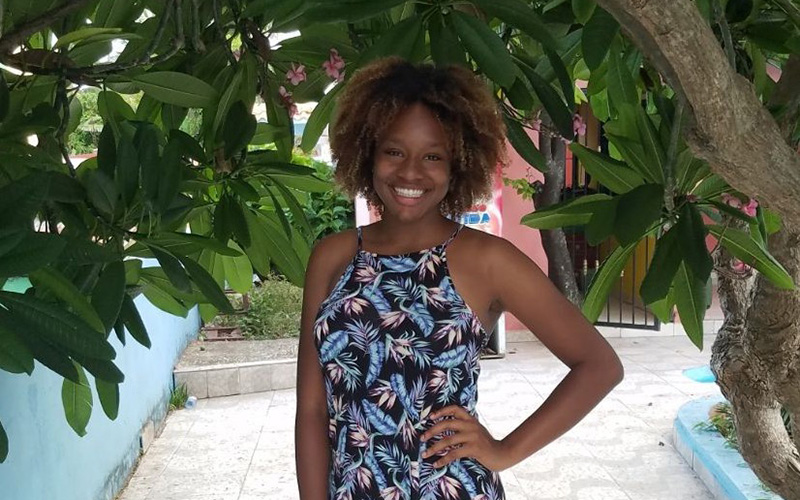
At Northwestern, both graduate and undergraduate students have opportunities to enhance their studies with global perspectives, including seminars featuring renowned speakers; a diverse and dynamic student body; and opportunities for living, learning, and working around the world.
The Global Engagement Studies Institute (GESI), a program run by Northwestern’s Roberta Buffett Institute for Global Studies, is one such opportunity for undergraduates. GESI partners with community organizations in developing countries, each of which focuses on areas such as health, education, social enterprise development, and women’s empowerment. Through GESI, teams of Northwestern students are placed with host families and spend 8 to 10 weeks of the summer in their chosen country. There, they work with organizations like the Foundation for Sustainable Development in Uganda or Kaya Responsible Travel in Vietnam.
This unique approach to collaborative, community-based learning equips students with real-world skills and has made GESI a nationally recognized study abroad program. Scholarships and financial aid—underwritten by gifts from NU Loyal members and other generous donors—make the program possible for many students with financial need.
Because GESI takes place during the summer, it’s an excellent option for students who might not otherwise be able to fit a quarter abroad into their academic plans. Such was the case for Rekhia Adams ’20. Rekhia was interested in studying abroad even before she entered college. “I knew that I was looking for an experience that would benefit either of my passions—the arts or humanitarianism—and would also allow me to develop my skills in a foreign language,” she explains. “After finding out about GESI, I realized that it was the perfect opportunity for me.”
Rekhia, a native of Trinidad and Tobago, decided to apply for GESI’s Dominican Republic program in order to learn about another Caribbean nation while also getting a chance to practice Spanish. While in the Dominican Republic, she partnered with Community Empowerment Solutions, an organization that provides an income-generating good that a community collectively controls and benefits from. Rekhia’s team was based in Ojeda, a rural town on the southern end of the island, and was tasked with determining whether a water filtration system would be useful there—and, if so, with implementing the project.
The students quickly learned that securing any water at all was a challenge because the community’s main system for water storage no longer functioned. After several meetings with community members to determine the source of the problem and discuss possible solutions, Rekhia and her peers met with the governmental agency responsible for managing and maintaining water systems in the Dominican Republic. Rekhia’s group helped facilitate conversations between this agency and community members, and in the process successfully advocated for a solution that would return safe water storage to the town.
During her time in the Dominican Republic, Rekhia drew on her background as a student in Northwestern’s School of Communication to work through language barriers she encountered. The large community meetings her group hosted were conducted in Spanish. “It was intimidating to me at first,” she says, “as I was not sure of the level of my Spanish skills and if I would be able to confidently get my points across.” But she practiced consistently, tackling her talking points as she would a theater performance by rehearsing again and again to ensure she would be effective and comfortable with new vocabulary.
By the end of the summer, Rekhia had improved her Spanish, gained firsthand experience with Dominican culture, and begun conversations with various government agencies to help support her host community. “Something that we were told before and during our program was that change takes time,” she notes. Sometimes she found this to be frustratingly true—plans to rebuild Ojeda’s water infrastructure were in progress but not completed by the time she left the country—but she’s also proud of her group’s role in organizing and advocating for Ojeda, and of the ways she pushed herself to grow and learn from those around her. “Through my work, I learned that adaptability is very important in these types of experiences,” Rekhia says. That’s a lesson she’ll be able to carry through the rest of her time at Northwestern and well into her future.